
Honored the Calendar Invitation?
The professional digital space crackles with invitations. Yet when we engage with LinkedIn Events—a platform built for professional intent—we encounter a paradox. We click Attending, and then both the guest and organizer are left hoping the commitment doesn’t slip through the cracks. This joint uncertainty isn’t a minor UX flaw; it’s a strategic oversight in a world where time is the most precious asset. Failing to honor a guest’s time is more than a missed RSVP—it’s a dent in a professional relationship.
What if LinkedIn, leveraging its vast network and technical expertise, treated the calendar invitation as the powerful, dynamic communication channel it truly is?
The Silent Protocol: A Gold Mine in Plain Sight
To grasp the weight of this missed opportunity, we must recognize the proper function of the professional
calendar protocol. The underlying event data used by every primary application—Outlook, Google Calendar,
Apple Calendar is a silent, universally understood language. It speaks the native tongue of time management.
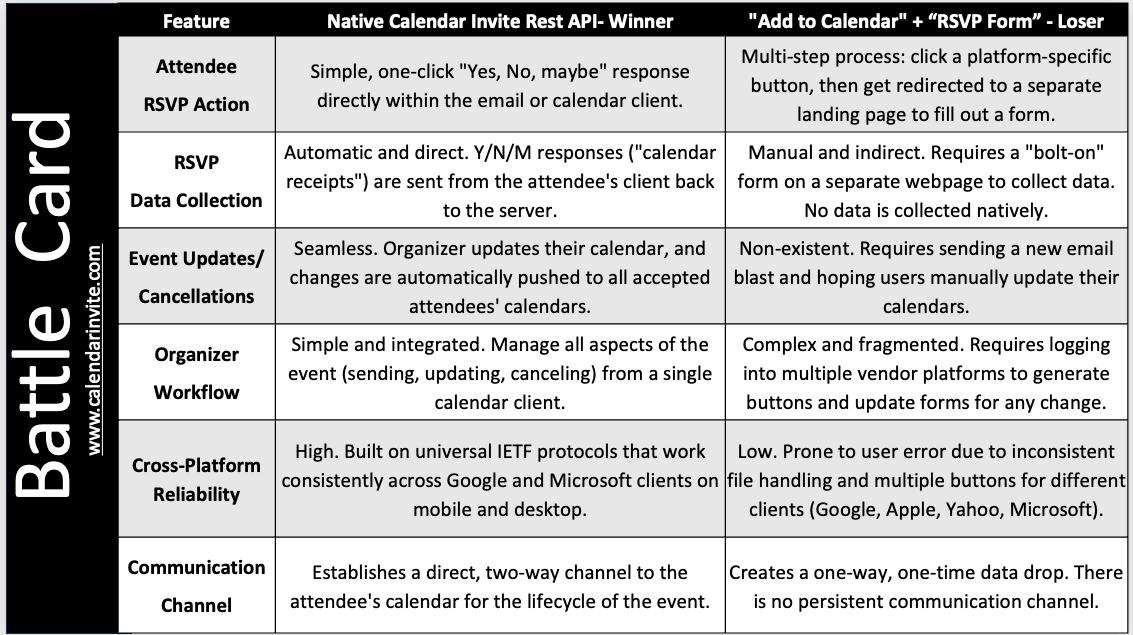
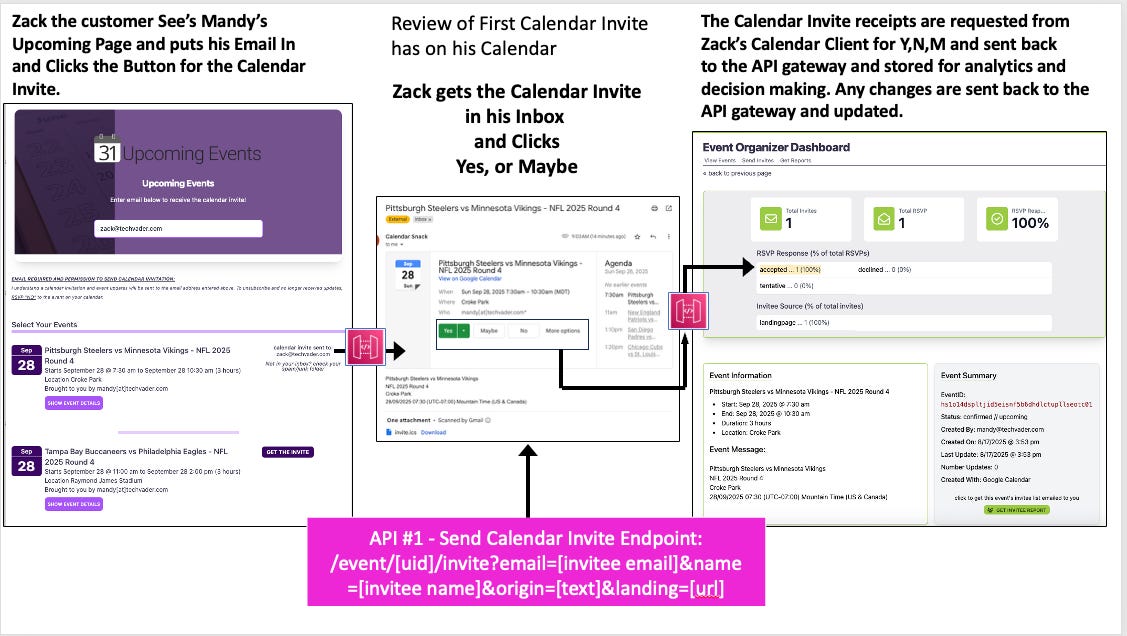
A valid Calendar Invitation isn’t a passive reminder; it’s a two‑way, authoritative connection. The time slot is instantly reserved on the guest’s schedule, establishing a formal, persistent commitment. Crucially, this reservation ensures that subsequent event changes, updates, or cancellations are automatically pushed to the guest’s calendar—unless they explicitly decline.
What many platforms offer—the simple Add to Calendar button—is a poor substitute. It places a static reminder on the surface of the calendar, lacking the core value of a full invitation: the ability to RSVP to the host and the certainty of seamless, automatic updates.
The LinkedIn “Walled Garden” vs. the Calendar’s Open Field
LinkedIn’s event functionality primarily operates within its own walled garden. When a user commits to an event, communication mainly occurs through LinkedIn notifications.
This strategy, aimed at maximizing on‑platform engagement, is both the key to social success and the bane of its users. It fundamentally disconnects the event from the single place professionals manage their actual lives: their calendar.
This approach devalues the event by treating the attendee as a consumer of a feed rather than an honored guest receiving an official, dynamic invitation. The platform prioritizes its own stickiness over the user’s efficient time management—and over the organizer’s need for reliable commitment.
Imagine the “What If…” Scenario
Let’s envision a world where LinkedIn genuinely embraces the calendar invitation as the primary, high‑value communication channel:
Honored Guest Experience: Invitations are sent directly to the professional email, presenting
Accept or Decline immediately. This signals that attendance is a respected priority, not a hopeful notification.
Dynamic Updates, Zero Friction: The organizer updates the event on LinkedIn, and the system utilizes the event’s unique fingerprint to push silent revisions to every non-declining guest automatically. The calendar entry becomes the single source of truth.
Enhanced Engagement: The calendar description, enabled by this rich invitation protocol, becomes a dynamic space for pre‑reads, speaker bios, links to polls, and other contextual assets—delivered directly to the guest’s time‑management tool.
Beyond Meetings: Rich Data for Attribution: Organizers track not just superficial “Attending” clicks, but the high‑value signal of a user who accepted the calendar invitation. This provides a far more accurate metric of genuine commitment.
Why Aren’t They Doing It? The Illusion of Complexity
Arguments against deeper integration often cite challenges like spam prevention and the difficulty of managing mass, updateable invitations. Yet tools like Calendly prove these obstacles are solvable.
Building the bridge that allows one event to update seamlessly on every guest’s calendar is a complex engineering effort—but it’s a choice of technical priority, not an insurmountable obstacle.
When a platform offers a feature that resembles professional event management but falls short of providing the one tool that guarantees authoritative commitment—the actual invitation—it misleads users who rely on LinkedIn to look out for their professional best interests. This path forces users into platform engagement, creating unnecessary friction for the guest and minimizing the actual, measurable impact for the event owner.
The Call to Action
LinkedIn has an unparalleled opportunity to redefine professional event management. By transitioning from a simple 'Add to Calendar' hack to an actual calendar-invitation protocol, LinkedIn could transform Events from a valuable promotional tool into an indispensable, high-confidence engine for actual attendance and collaboration.
It’s time to honor the invite—and, in doing so, honor the attendee’s time.